In 1968, I got my first real inkling that the trajectory of the human race was hurtling us toward a less-than lovely tomorrow.
Evanston Township High School, freshman biology, somewhere between counting fruit flies and dissecting fetal pigs, we studied population growth rates and the effects of overpopulation on the social bonds and behavior of rats. That unit convinced me that our species’ ever-increasing numbers posed an imminent threat to our own well-being and the health of our planet.
Also in ’68, I read Rachel Carson’s Silent Spring. From my vantage on the outskirts of Chicago, I could see clearly that the untamed wild my urban-born soul longed for was hard to come by. Carson’s heartbreaking seminal work revealed that, in fact, we were poisoning what was left of the wild while ruthlessly turning our hospitable Terran home into an inhospitable hellscape.
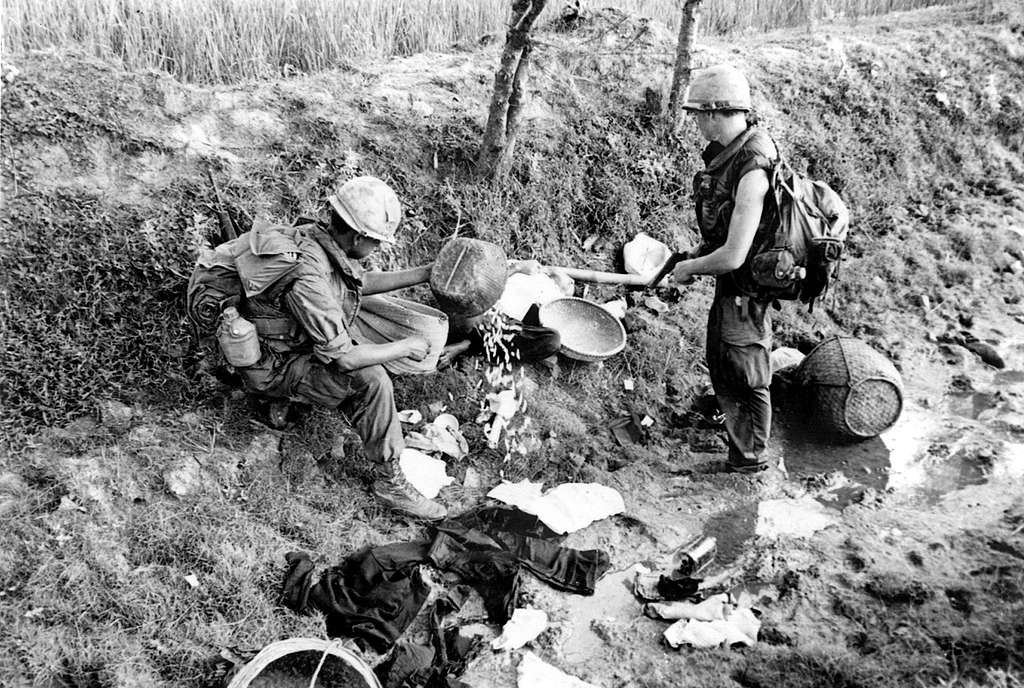
The political-activism genes I’d inherited, particularly through my mother’s line, were triggered big time that year by the Tet Offensive and My Lai Massacre, by the draft facing our senior and junior boys, the assassinations of Dr. Martin Luther King, Jr. and Robert F. Kennedy, race riots in the Second City’s urban ghettos, and the Chicago Democratic National Convention.
Quick digression – the musical Hair opened on Broadway in 1968, making the title of this post an enormously witty tie-in.
In college, my population/pollution/politics trinity gelled into a personal vision of humankind’s most probable future. After gutting Mother Earth for all she was worth, I theorized, the greedy rico capitalists who owned it all would inflict greater ruin upon us (and upon her) by levying the full might of their militaries against each other in pointless pissing contests and throwing Hulk-ish temper tantrums that would smash everything they weren’t able to take by force.
Regrettably, in all these years, I’ve never found any reason to alter my prediction. As much as I wish it weren’t so, my vision has failed to meet expectations only in the speed with which it is coming to pass. I thought I’d be long gone before our planet started to cook, our water, soil, sunlight, and air became noticeably toxic, and megalomaniacal dictators a lá Palpatine ruled the better part of the world. Before we approached the brink of existential destruction.
Yet, here we are, at the Lugnasadh of our era. The beginning of the harvest season, when, like it or not, it’s time to start reaping what we have sown.
It’s early days yet, but, as I’ve noted before, we’re already contending with heat bubbles, deadly heat waves, heat islands, record-setting cold winters, fires and smoke, flash floods, atmospheric rivers, an uptick in tornadoes, and invasive plant and animal (especially insect) species. And we’ve got it easy. Those living on the fringes of Mom’s habitable-for-humans areas are already facing/ dying from next-gen tsunamis and hurricanes, sea level rise, droughts, and water shortages that have resulted in agricultural collapse, devastated residential infrastructure, and forced relocation.
While anthropogenic climate change is directly attributable to specific human activities (cutting down rain forests, burning fossil fuels, that sort of thing), suicidal adherence to these activities stems from the interlocked threats I identified back in high school. Overpopulation. Fragmented social bonds. Scarcity of resources. Capitalism. Greed.
As for the New World Order my college-self predicted, we’re scary-close to there. Only 13% of the global population currently live in liberal democracies. The percentage that live in illiberal autocracies varies depending on the parameters, but the range is from 39% under strict authoritarian regimes to 72% under authoritarian rule when “autocracy” is more broadly defined. Not only is there an abundance of tyranny world-wide, two out of the big-three super-powers are oligarchies (America, Russia), and the third (China) is a one-party dictatorship with personal-dictator tendencies. As I’m sure you’ve noticed, dear readers, the pissing contest has begun.
From political analysts to podcasters, historians to comedy news-hosts, distant relatives to the people next door, the question everyone keeps asking (and endlessly trying to answer) is: How did we get here?
My younger self assumed our species’ natural imperatives and basest instincts would be the source of all the tsouris (troubles). I still think those factors are hugely influencing our current situation. But – I’ve got one thing high-school and college me didn’t have! A fresh perspective, courtesy of First America, a podcast about American history.
It’s not the history of the two-party system or the American fascist movement. It’s not about the lingering animosities of the Civil War or the legacy of robber-baron capitalism. It’s American history with Native Americans in the picture, and omg but the people of the First Nations know a whole heckuva lot about the origins of authoritarianism on this continent – because it’s their story, the one that was largely and intentionally precluded from being recorded in the first place, and that was spuriously rewritten or wholly expunged from the record whenever it somehow managed to sneak in.
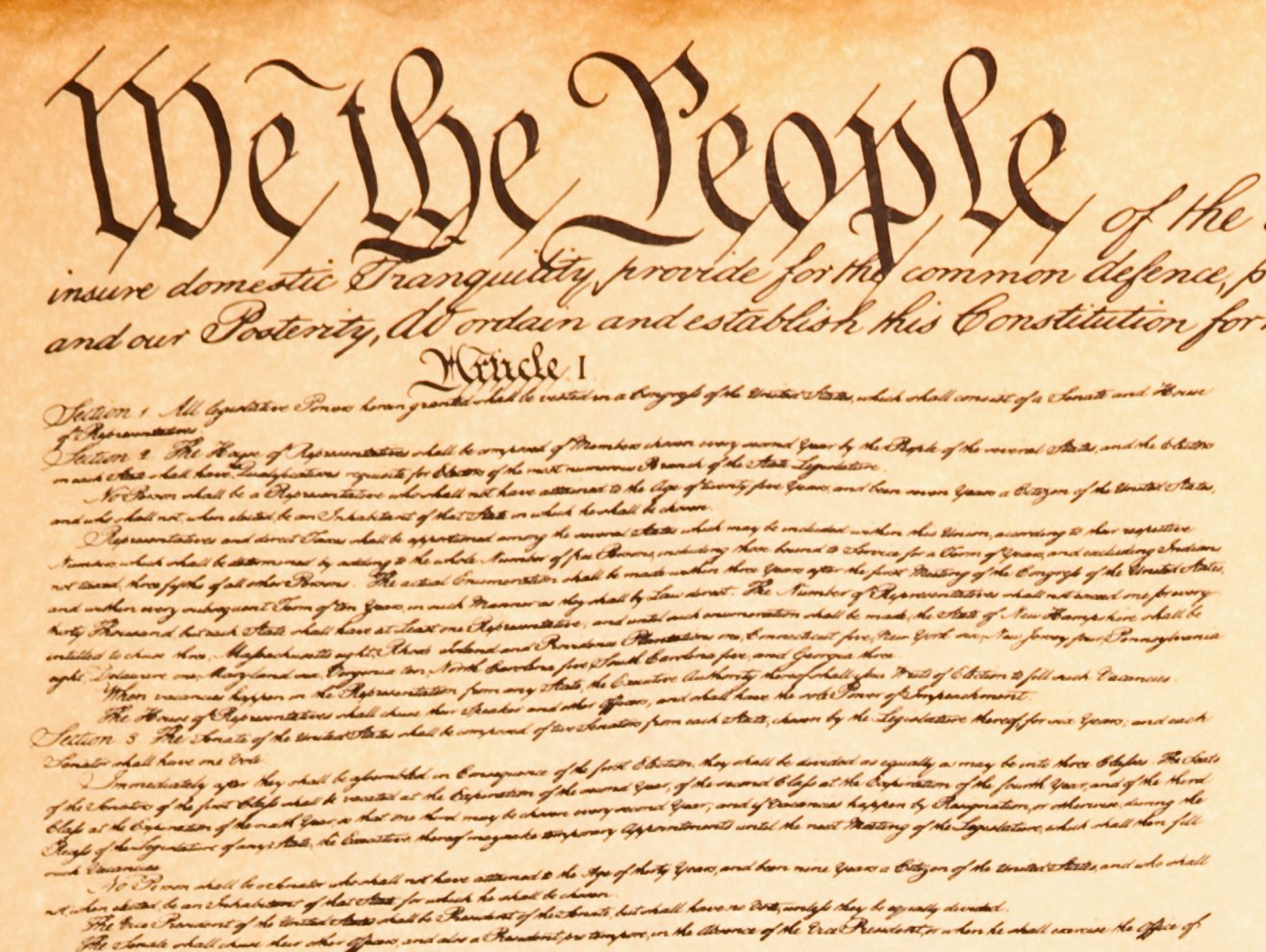
No spoilers, but here’s a teaser: The precepts of autocratic rule are embedded in our Constitution, inked in as legal justification for the methods the colonists employed to “solve” the “Indian problem.”
If all this is making you feel less-than joyous or un-celebratory on this blesséd cross-quarter Lughnasadh Day, first remember that pessimism is not fatalism. Then, click on the podcast title above, follow the link, and give a listen. (The link goes to Apple Podcasts, but you can find First America on Pushkin, Spotify … or wherever you get your podcasts?)
Learning this omitted/erased history from those who have never forgotten it and have been living under American authoritarian rule for generations has given me hope. Clearly, resistance is not futile. Surely, the time to fight for our rights and freedoms, protest injustice, speak truth, advocate for those who are suffering most, and cultivate greater compassion is now, when things aren’t going so well. And, surely, the way to handle the madness and stress is day-by-day, cheering the good news (sweeping progressive victories in the American primaries), laughing at the farce (have you seen the Wiggy Wanker’s new hair? (click HERE), honoring the season, connecting with community, and holding those we love in our heart of hearts.
Maybe the world is going to hell in a handbasket … but we don’t have to take the direct route.
This poem by Kimberly Blaeser (Anishinaabe (aka Ojibwe, Chippewa), White Earth Nation) says the same, says more, and says it better.
About Standing (in Kinship)

We all have the same little bones in our foot
twenty-six with funny names like navicular.
Together they build something strong—
our foot arch a pyramid holding us up.
The bones don’t get casts when they break.
We tape them—one phalange to its neighbor for support.
(Other things like sorrow work that way, too—
find healing in the leaning, the closeness.)
Our feet have one quarter of all the bones in our body.
Maybe we should give more honor to feet
and to all those tiny but blessed cogs in the world—
communities, the forgotten architecture of friendship.
May all the blessings of the season be yours.
Risa, I hope that all continues well with you & Roy.
tu fiel amigo, Adriano
Amigo entrañable, all is well with us, though I, for one, still find life out here very different (she says, listening to the thunder and the summer rain (80-deg/26-deg outside)). Hope with all our hearts all is well with you and Mary, too. Con cariños <3
Feck, as we might say here. And do. Frequently.
When I get my Time Machine sorted, my first port of call is to head back to the Luddites and tell them they were right about everything. Then I’ll have a really busy time sorting out loads of other stuff. (I’m making a list, but feel free to send on your ideas). But as I have a Time Machine, I suppose time’s one thing I’ll have plenty of.
Unlike the reality, sadly…
Oh, how gallant of you! While “Luddite” is used pejoratively today, imho the Luddites were philosophically spot-on, labor-defending political activists back in the early 19th century.
But, alas, as sci-fi lit and cinema have repeatedly shown us, time-travel is a flawed solution. If you go back and give Luddites the edge over the industrialists, by the end of the 19th century we’ll have corrupt guild masters instead of robber barons — and women still won’t have the vote.
They say time isn’t linear. They also say you can’t step into the same river twice. And in reply to my request for a fake-deep quote about inner peace and/or a bright future, my search engine’s AI says: “Happiness is a choice, so just sprinkle glitter on your gray clouds, turn that frown upside down into a smiley emoji, and remember that today you choose joy because your soul is sparkling!”
Wish I’d thought of that.
Well, indeed. But I’d point out to Heraclitus that I have stepped into the same river twice and got wet both times.
As for the glitter; dogshit sprinkled with glitter still looks an awful lot like dogshit. ;-)
Right. Back to work on my time machine. Things to do, people to see…
Ah, but it looks like shiny dogshit. Still, I expect you’re right about the time machine. Good luck with it! What could possibly go wrong?
Thank You
Thank YOU for the read and for stopping by.
When I saw you’d commented I thought I’d reply with a quick Stoic quote to match the theme of my blog, perhaps Seneca’s “We are more often frightened than hurt; and we suffer more in imagination than in reality.”
Take that one as a bonus. Fer reals, I’m giving you Mark Twain: “I’ve had a lot of worries in my life, most of which never happened.”
Why the puppets are swallowing the lies. It’s only when we like the answer that we accept the reasoning.
True on the lies. Usually on the reasoning.
I’ve def heard myself say (on occasion), “I see your point…” or “I can understand why you’d feel that way (think that, believe that, choose to do that)…” But accepting the reasoning behind a MAHA adherent’s views or getting why some people sit on their
asseshands instead of voting for a least-worst candidate can be a solid start to genuine discussion.The pre-industrial indigenous peoples and cultures of the world understood how to live in balance with our Grandmother Gaea, each in their own ways and traditions. We humans have achieved miraculous capabilities through the understanding of the physical universe made possible by science and technology, but have lost the reverence we owe to the living system that created and sustains us.
I choose to believe that we will learn how to survive the disasters we’ve wrought upon the world, and how to thrive in balance with Her. But I think for that to happen, we must recover our understanding and respect for what is truly sacred.
Thanks for your passion.
Thank you for sharing your cogent and hopeful thoughts.
I spill my passion on a page where none but like-thinkers read and respond to it. You go out into the world to confront those who create the imbalances that threaten us all for no reason except to exploit them. Thanks for your courage.
Bravo Roy!
Adrian
Lieve Risa, Inderdaad, de ravage is bijna niet te overzien. De bosbranden in Frankrijk en Spanje doen mij pijn in het hart en toch blijven mensen onbekommerd vervuilen. Overheden draaien verstandige vroegere besluiten terug. Ik leef met je mee in je zorg om de natuur en ik ben altijd blij weer iets van je te lezen. Veel liefs Margreet
Het is zo geweldig om van je te horen, lieve Margreet. I know exactly how you feel about the wildfires in France and Spain. Fires have impacted our community directly (Sonoma fires) and indirectly (Calfornian and Canadian wildfire smoke) for the past 9 years. Yet, our government and DOGE have weakened the Federal Wildfire Response, firing firefighters and closing government laboratories that study the effects of wildfires on human health, air quality, wildlife habitat, and forest ecosystems. Het is een gekke wereld …
Always happy to hear from you, too, beste vriend.
Resistance may not be futile, but I’m sure tired of waiting to see some positive results.
Oh, I hear ya. And if we’re tired now … Franco held power for 39 years, enjoying the personal benefits of an absolute dictatorship for 36 of them before Spain slipped out from under his fascist thumb, thanks to him kicking the bucket. First serving a 4-yr term as prime minister (1998-2002), Orbán’s second “term” as PM was a 16-yr “Illiberal Era” aka a hybrid regime/electoral autocracy. And those are the dictatorships that spring to mind as having ended. China has operated as an authoritarian one-party dictatorship for 76 years, since the founding of the People’s Republic of China on October 1, 1949 – and there’s no end in sight.
If, by some miracle, our gerrymandered, ICE-monitored, ID-mandated, mail-in ballot restricted elections somehow … (I was going to say “turn the Congressional tide”, but as it’s more of a stagnant pool than a flowing body of water …) if they somehow crack the ice that’s been immobilizing our deep-frozen Congress, maybe – MAYBE – our flat-lined democracy will get a little adrenaline and CPR?
It rained here in Sonoma County. In early September. Maybe 2026 has the potential for miracles to happen after all.
Watch out, my friend. Once we start considering the possibility that an unseasonable shower (likely a symptom of global warming) might be a good omen, we start losing our unblemished reputations as irredeemable pessimists.
A price I’m willing to pay. ;) Fingers crossed …
I am just so proud to be related (even if by marriage) to someone so smart, and son brilliant in many ways! Thank you for writing this.
I’m just so grateful to have you in my corner, showering my literary ranting and rambling with such generous praise. <3